
10 Best Ceiling Lighting Suppliers for Global Buyers
Choosing among the 10 Best Ceiling Lighting Suppliers for Global Buyers requires more than comparing catalog prices. Lighting Ceiling products influence energy use, visual comfort, maintenance costs, and project safety. The International Energy Agency reports that lighting consumes about 15% of global electricity. That figure makes efficiency a purchasing concern, not merely a design preference.
The U.S. Department of Energy states that LED lighting uses at least 75% less energy than incandescent lighting. It also lasts considerably longer. Reliable suppliers should therefore provide verified lumen output, color consistency, lifetime testing, and clear warranty terms. Buyers should request LM-79 photometric reports, LM-80 data, flicker information, and compatible controls. Certifications also matter. Depending on the destination, products may need CE, UKCA, UL, RoHS, or other recognized approvals.
This guide evaluates suppliers through practical buyer criteria, including manufacturing experience, customization, lead times, after-sales support, and international documentation. A low quotation can hide weak drivers, unstable color temperature, or expensive replacement work. It happens. No ranking can remove every uncertainty, especially across different climates and electrical systems. However, transparent testing and traceable production reduce avoidable risks. Suppliers with strong engineering teams can recommend beam angles, IP ratings, mounting methods, and dimming systems for real spaces. Warehouses, hotels, offices, and homes need different solutions. The best partner is not always the cheapest one. It is the supplier that can prove performance consistently, communicate clearly, and support the product after installation.
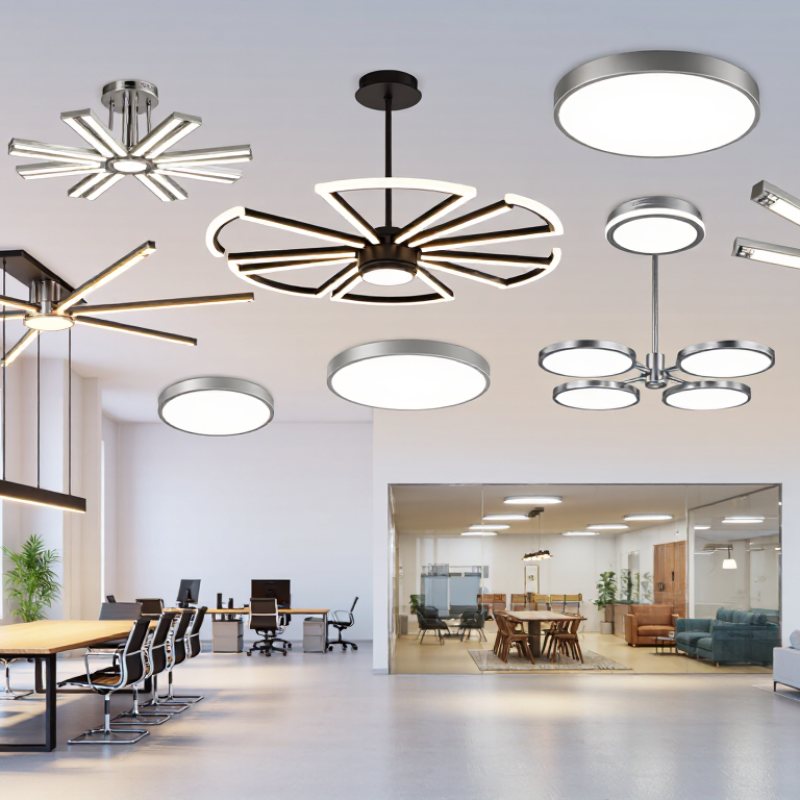
What Global Buyers Should Know About Ceiling Lighting Suppliers
Global buyers should judge ceiling lighting suppliers beyond catalog size and unit price. The supplier must show verified photometric files, tested lifetime data, and clear warranty terms. A ceiling fixture may look identical in photos, yet its driver, heat control, and diffuser can differ sharply. Ask for LM-79 or equivalent testing, color consistency data, and samples from actual production batches.
Energy performance deserves careful attention. The International Energy Agency reports that lighting consumes about 15% of global electricity. The U.S. Department of Energy states that LED lighting can use at least 75% less energy than incandescent products. However, high efficiency does not guarantee suitable light quality. Check delivered lumens, glare ratings, color rendering, flicker, and performance at your local voltage. A cheaper quote can become expensive after replacements, delays, or failed inspections. I have seen buyers focus too heavily on price. That decision is understandable, but often incomplete.
Tips: Request a sample before a bulk order. Compare the same specifications, not only wattage. Confirm certification requirements for each destination market, including electrical safety and electromagnetic compatibility. Review factory capacity, production lead times, spare-part access, and packaging strength. Ask how defects are recorded and resolved. Also, obtain written confirmation of component changes. Suppliers may improve products, but unannounced changes can disturb a carefully planned project. Use an independent inspection when order value or installation risk is high.
10 Best Ceiling Lighting Suppliers for Global Buyers - What Global Buyers Should Know About Ceiling Lighting Suppliers
| Rank | Supplier Profile | Best For | Typical Ceiling Lighting Range | Common Materials | International Buyer Strength | Documents to Request | Typical Lead-Time Planning | Main Due-Diligence Check |
|---|---|---|---|---|---|---|---|---|
| 1 | Large-Scale LED Manufacturer | Retail programs, commercial projects, and high-volume purchasing | LED panels, surface-mounted fixtures, troffers, and modular ceiling systems | Aluminum, steel, polycarbonate, acrylic, and tempered glass | Higher production capacity, standardized quality procedures, and export packaging | Test reports, product specification sheets, warranty terms, and factory audit records | Samples commonly require 1–3 weeks; mass production depends on customization and volume | Verify production capacity, batch consistency, and the validity of laboratory reports |
| 2 | Architectural Lighting Specialist | Hotels, offices, retail interiors, and design-led developments | Recessed downlights, linear fixtures, trimless systems, and decorative ceiling lighting | Extruded aluminum, die-cast aluminum, steel, glass, and fabric | Optical design support, photometric files, and project-based customization | IES or LDT files, photometric reports, drawings, installation guides, and control compatibility details | Design approval may take several weeks; project production is scheduled after final drawings | Confirm beam angle, glare control, color consistency, and compatibility with local controls |
| 3 | Decorative Ceiling Fixture Supplier | Residential projects, hospitality spaces, and premium interiors | Pendant lights, chandeliers, semi-flush mounts, and statement fixtures | Glass, metal, crystal, wood, ceramic, and textile shades | Wide design selection, small-batch development, and finish customization | Material declarations, electrical test reports, care instructions, and packaging specifications | Sample development often takes 2–6 weeks; fragile products require additional packing time | Inspect finish quality, glass protection, suspension strength, and replacement-part availability |
| 4 | Commercial and Industrial Lighting Supplier | Warehouses, factories, supermarkets, and public buildings | High-bay fixtures, vapor-tight luminaires, bulkheads, and utility ceiling lights | Aluminum, galvanized steel, polycarbonate, and impact-resistant plastics | Durability-focused products, higher lumen output, and application-specific advice | Ingress-protection data, impact ratings, thermal test results, and installation instructions | Standard products may ship faster; customized industrial products need engineering approval | Check IP and impact ratings, operating temperature, driver reliability, and maintenance access |
| 5 | Smart Lighting and Controls Supplier | Energy-management projects, offices, schools, and smart buildings | Connected panels, tunable-white fixtures, occupancy-controlled lights, and emergency systems | Aluminum, steel, polycarbonate, electronic drivers, and sensor modules | Control-system integration, commissioning support, and energy-monitoring options | Communication protocol details, cybersecurity information, wiring diagrams, and software documentation | Hardware samples may be available quickly; software configuration and site commissioning add time | Test interoperability, data ownership, firmware support, and offline operating capability |
| 6 | Energy-Efficient Retrofit Supplier | Replacing fluorescent or compact fluorescent ceiling fixtures | LED retrofit tubes, conversion kits, flat panels, and direct-replacement luminaires | Aluminum, steel, polycarbonate, and recyclable diffuser materials | Lower energy consumption, simplified installation, and compatibility assessment | Electrical compatibility data, installation procedures, energy calculations, and disposal guidance | Standard retrofit items are generally easier to source than fully customized fixtures | Confirm ballast compatibility, wiring method, lumen maintenance, and actual energy savings |
| 7 | Low-Voltage and Track Lighting Supplier | Retail displays, galleries, restaurants, and flexible interiors | Track heads, magnetic systems, spotlights, and adjustable ceiling modules | Aluminum, steel, glass lenses, copper conductors, and engineered plastics | Flexible layouts, replaceable modules, and targeted beam control | System load data, wiring diagrams, photometric files, and adapter compatibility information | Product availability varies by system configuration; complete kits need compatibility confirmation | Check total system wattage, connector standards, mechanical fit, and spare-module supply |
| 8 | Emergency and Safety Lighting Supplier | Public facilities, commercial buildings, transport areas, and evacuation routes | Emergency ceiling lights, exit signs, maintained fittings, and non-maintained fittings | Steel, aluminum, polycarbonate, acrylic, batteries, and electronic components | Safety-focused product design, testing procedures, and inspection documentation | Battery test data, duration ratings, circuit diagrams, inspection schedules, and local compliance evidence | Allow additional time for compliance review, battery testing, and project inspection requirements | Verify required emergency duration, battery replacement policy, test-button operation, and local code compliance |
| 9 | Custom Project Lighting Manufacturer | Large developments requiring non-standard sizes, shapes, or finishes | Linear systems, geometric fixtures, integrated architectural elements, and bespoke assemblies | Aluminum, steel, brass, acrylic, glass, wood, and specialty coatings | Engineering drawings, prototypes, mock-ups, and coordinated project delivery | Approved drawings, prototypes, material samples, photometric data, and quality-control plans | Prototype and approval stages can extend the schedule; define milestones before placing the order | Confirm design ownership, change-control procedures, installation tolerances, and replacement strategy |
| 10 | Wholesale and Multi-Category Lighting Distributor | Importers, electrical wholesalers, contractors, and mixed-product purchasing | Panels, downlights, pendants, bulkheads, outdoor fixtures, and accessories | Aluminum, steel, glass, acrylic, polycarbonate, and composite materials | Broader product coverage, consolidated shipments, and simpler product sourcing | Current catalogs, stock statements, technical sheets, warranty policies, and shipment records | In-stock items can reduce purchasing time; replenishment depends on inventory and shipping schedules | Check stock accuracy, product traceability, warranty handling, and consistency between catalog and shipment |
Related Posts
-
Unveiling the Future of Lighting Ceiling Solutions at the 137th Canton Fair Guangzhou 2025
-
Exploring Alternatives to Best Ceiling Led Lights for Your Home
-
2026 How to Choose the Right LED Fixtures for Your Home Lighting Needs?
-
Discover China's Smart Manufacturing Driving Global Demand for Quality Best Commercial LED Solutions
-

Illuminate Your Space with Innovative Led Lighting Solutions for Global Buyers
-
2026 Best Menu Lighting Ideas for Restaurants and Cafes?