How to Choose the Right Lithium Batteries for Your Devices?
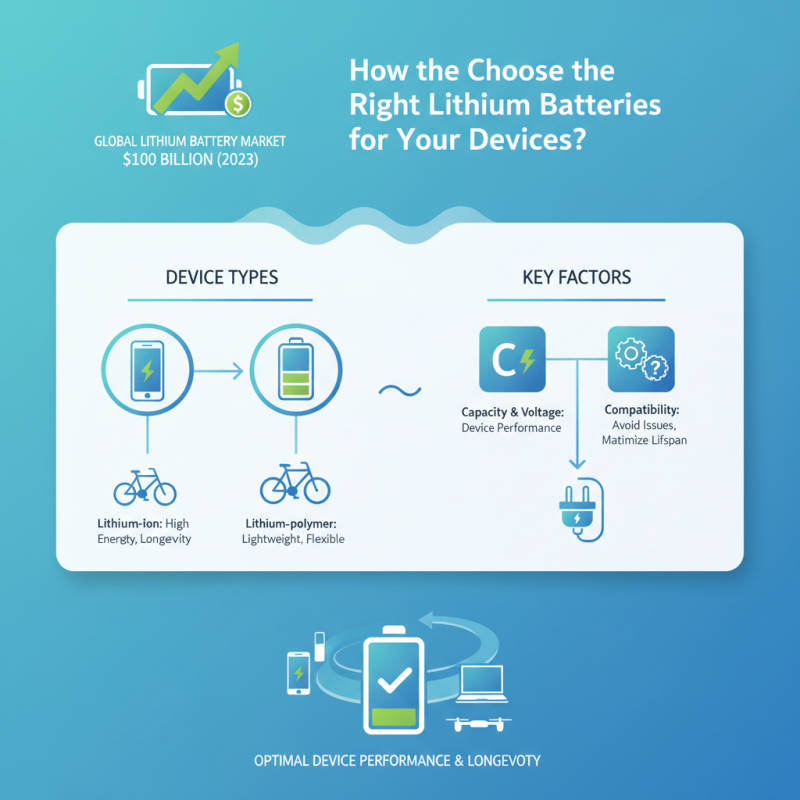
Choosing the right Lithium Batteries is crucial for device performance. In 2023, the global lithium battery market is expected to reach 100 billion dollars. Awareness of proper selection ensures efficiency and safety in various applications.
Different devices require specific battery types. For example, smartphones often use lithium-ion batteries. They provide high energy density and longevity. However, other devices like electric bikes may need lithium-polymer batteries for their lightweight benefits. It’s important to understand these distinctions.
Consumers often overlook the importance of capacity and voltage. This can lead to poor device performance. Reports indicate that a significant number of users are unaware of compatibility issues. Relying solely on brand names can be misleading. The right lithium battery choice can maximize your device's lifespan and functionality.
Understanding Lithium Battery Types: Li-ion vs. Li-Po
When selecting lithium batteries, understanding the differences between Li-ion and Li-Po is crucial. Lithium-ion (Li-ion) batteries are widely used due to their high energy density and long cycle life. They are typically found in laptops, smartphones, and electric vehicles. According to industry data, Li-ion batteries can deliver up to 250 Wh/kg, making them a popular choice for portable devices.
On the other hand, lithium polymer (Li-Po) batteries are lighter and can be shaped into various forms. They are prevalent in drones and smartphones, valued for being flexible and lightweight. However, Li-Po batteries generally offer lower energy density, often around 150 Wh/kg. Their vulnerability to punctures and the need for protective circuitry can lead to failures.
Considering these factors is vital. Battery choice impacts device performance and longevity. It's essential to weigh energy needs against safety. Users must reflect on application requirements. Each type has its merits and drawbacks. Making an informed decision requires careful consideration of specific use cases.
How to Choose the Right Lithium Batteries for Your Devices?
| Battery Type | Energy Density (Wh/kg) | Cycle Life (Charge/Discharge Cycles) | Weight (grams) | Common Applications |
| Li-ion | 150-200 | 500-1500 | 100-200 | Smartphones, Laptops, Electric Vehicles |
| Li-Po | 150-250 | 300-500 | 30-40 | Tablets, Drones, Portable Devices |
| Li-ion Polymer | 150-220 | 400-600 | 50-150 | Wearable Devices, Lightweight Electronics |
Assessing Capacity and Voltage Requirements for Your Devices
When choosing lithium batteries for your devices, capacity and voltage are key factors. Understanding these can be tricky. Battery capacity is measured in milliampere-hours (mAh) or ampere-hours (Ah). A higher capacity means longer usage time for your devices. For instance, a device requiring 1000mAh will drain a 2000mAh battery more slowly. However, don't assume that more is always better. A battery that exceeds your device's requirements can lead to inefficiencies.
Voltage is equally important. Different devices operate at specific voltage levels. Matching the voltage is crucial. Using a battery with too high voltage can damage the device. Conversely, a lower voltage may cause it to underperform. Many devices specify voltage, but sometimes it's just not clear. You might need to check documentation or do online research to find this information. Balancing both capacity and voltage needs critical thinking.
Sometimes, users overlook these details. It's easy to get caught up in brand names or price options. However, understanding your device's energy needs is essential. Take the time to assess both aspects carefully. Your devices will thank you in the long run. Mistakes can happen, and learning from them will improve your experience with lithium batteries.
Evaluating Battery Life Expectancy and Charge Cycles
When choosing lithium batteries, assessing battery life expectancy is crucial. Battery life directly impacts how often you need replacements. A quality lithium battery can last for years, but some variances exist. Users should consider their device usage and energy demands carefully. A high-drain device will deplete its battery faster.
Charge cycles are another essential factor. Each time a battery goes from full to empty, it counts as a cycle. Many batteries have a limited number of cycles, impacting long-term performance. A battery rated for 500 cycles may degrade significantly after that point. This degradation often leads to reduced run times. Understanding these details helps in making informed decisions.
It’s also good to reflect on your specific needs. Some users prioritize longevity over power. Others may need quick-to-charge options. Being aware of how different ranges perform is fundamental. Researching the specific chemistry and construction can reveal their strengths and weaknesses.
Identifying Safety Ratings and Certifications for Lithium Batteries
Choosing the right lithium batteries involves understanding safety ratings and certifications. Not all batteries are created equal. Some may not meet essential safety standards. Look for UL, CE, and RoHS certifications. These indicate rigorous testing and compliance with safety regulations.
Safety ratings are crucial. They reflect the battery's performance and reliability. A battery without a safety rating can become a risk. It might overheat or even leak. Users should pay close attention to these details. Reading specifications thoroughly is essential.
Don’t assume all lithium batteries are safe. Even small devices can use risky batteries. Manufacturers may cut costs at the expense of safety. Regularly checking reviews can help identify potential issues. Also, remember that battery size matters. Mismatched sizes may lead to malfunctions. Always verify that the battery fits correctly in your device.
Considering Environmental Impact and Recycling Options in Battery Choices
When selecting lithium batteries, it's essential to consider their environmental impact. Lithium extraction can harm ecosystems. It often requires large amounts of water and energy. We must think about this when choosing a battery.
Recycling options should also influence your decision. Many lithium batteries are not recyclable in conventional ways. In fact, improper disposal can lead to toxic chemical leaks. Exploring local recycling programs is vital. Some municipalities offer collection points for old batteries.
While lithium batteries are efficient, the long-term effects are still uncertain. The rise in battery demand increases environmental strain. We need to reflect on the choices we make. Sustainable alternatives may be harder to find. Still, our responsibility lies in securing a healthier planet.